
If You Have to Sell the Master Plan, It’s the Wrong Plan


Why the Best Master Plans Don’t Need to Be Sold
If your board is discussing how to "sell" the master plan or "get it approved," pause.
Those phrases are common in private club governance. They sound confident, strategic, and experienced, but they should raise concern.
A golf course master plan should not depend on persuasion tactics or political choreography to be legitimate. If approval feels like something that must be "sold," then clarity is lacking, and alignment might be an illusion.
Experienced architects do not have to "sell" the master plan. They do not have to outmaneuver a discerning membership or a stakeholder group. They create clarity first; only then does alignment follow as the natural progression. That distinction is important.
The Seduction of Selling
When "getting it through" becomes the objective, energy shifts toward the path of least resistance, which may sell the club short of its potential. Or the focus shifts toward optics rather than clarity, tantalizing the viewer without a full understanding of what the vision is or isn't. Renderings become more dramatic. Language becomes carefully curated. The rollout becomes more strategic.

There is nothing wrong with strong graphics or compelling storytelling. A sharp presentation is an essential tool. But tools are meant to illuminate — not to compensate.
Transformative visuals can create emotional momentum before technical clarity has formed. The room can be seduced before it fully understands what it is committing to. That is not alignment. That is acceleration, and without clarity, it is fragile.
Clubs should be wary of being "sold" before clarity exists. Because once renovation is complete, there is no easy undo button.
A well-thought-out master plan should not feel like a grand departure that needs defending. It should feel like natural evolution. A logical next chapter in a course's story. When that coherence and clarity are present, persuasion becomes unnecessary.
Boldness Vs. Restraint

Alignment does not necessarily mean conservative, nor does it always mean aggressive.
Some clubs reach a point where incremental improvement is no longer responsible. Infrastructure has reached the end of its lifecycle. Safety issues have surfaced. Maintenance economics are unsustainable. In those cases, meaningful reconfiguration may be entirely appropriate.
Other courses are fundamentally sound. Their routing remains strong. Their infrastructure is serviceable. Their identity is intact. In those cases, disciplined restraint reveals real competence.
Neither boldness nor restraint is inherently virtuous. The appropriate response is the one that is coherent with the club's identity, its operational realities, and its long-term trajectory.
The issue is not how dramatic the views are on opening day. The issue is whether members recognize themselves in it. When clarity exists, even significant change feels measured. When clarity is absent, even modest refinement feels destabilizing.
Engagement: Signal vs. Noise
Most clubs solicit input; fewer extract meaning.
Signal is a pattern. It is when members across demographics consistently describe the same strengths and the same frustrations. Noise is a preference. It is a stylistic bias. It is the loudest voice in the room, repeating a personal grievance.

Planning around noise produces compromise layered on compromise. Planning around signal produces direction. Real engagement goes deeper than, "What would you change on Hole 7?"
It asks:
- Where does the pace of play consistently break down?
- Where do safety concerns repeatedly surface?
- What elements generate quiet pride rather than loud debate?
- What frustrations persist regardless of leadership and committee assignments?
When those patterns become clear, the plan is no longer reacting to opinion. It is responding to identity. That is the foundation of alignment.
Data Creates Inevitability
Clarity is philosophical — but it is also empirical.
When the drainage no longer performs. Or the irrigation infrastructure is at the end of its useful life. Greens are shrinking over the decades. Labor allocation issues persist.
These are not aesthetic debates. They are measurable conditions.
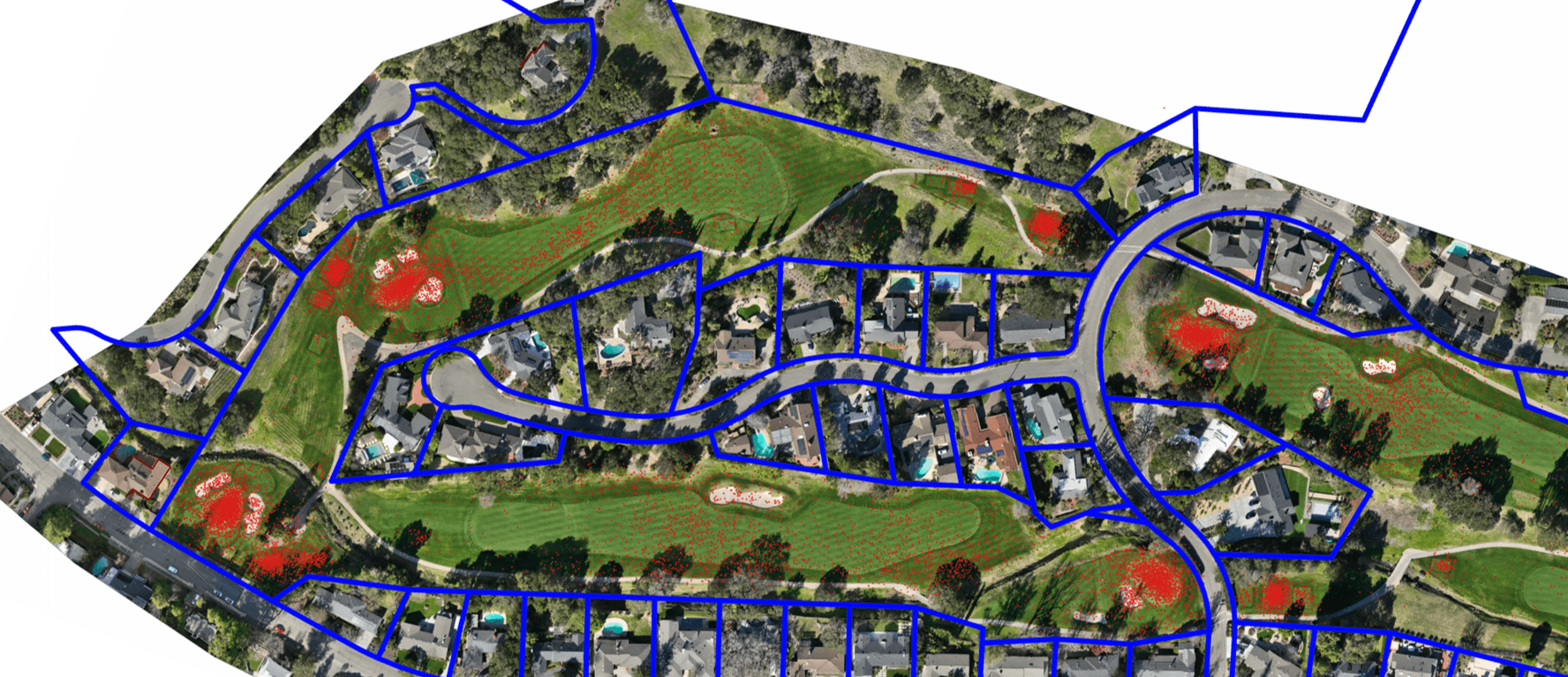
When we present objective data honestly and clearly, the conversation changes. What once felt optional begins to feel necessary.
At that point, the club no longer needs persuasion. It is recognizing reality. And when reality and identity point in the same direction, approval ceases to feel political. It feels logical.
When a Plan Fails, the Club Remembers
Many Clubs carry institutional scar tissue.
A master plan was developed. Committees worked. Money was spent. A vote was taken. The proposal failed.
Cost may have played a role. The scope may have been ambitious. Disruption may have felt overwhelming. But beneath those factors is often a clarity gap.
Members may have thought they understood the mandate. They may not have understood what the club was about to become.
Disruption is part of any meaningful evolution. Avoiding disruption entirely is unrealistic. But disruption without a clear, shared trajectory feels unbearable. Disruption connected to a future members recognize as their own feels intentional.
The role of the planning process is not to outmaneuver resistance. It is to allow the club to arrive, on its own, at the conclusion that evolution is necessary. Then approval does not feel forced. It feels like affirmation. Clarity and alignment are not just design virtues; they are a form of governance protection.
The Architect's Responsibility
An architect's responsibility is not to win votes. It is not to rely on the latest fads or the stylistic preferences of critics or amateur authorities on golf course architecture.
It is not to promise that a project can be "pushed through" the membership dynamics. It is to create clarity, full stop.
One of the most persistent misconceptions about master planning is the belief that an architect can somehow “get a plan approved.” In reality, architects do not approve master plans—clubs do. The architect’s role is not to guarantee the outcome but to guide the process: helping leadership clarify objectives, presenting options, and facilitating thoughtful discussion among members. When that process is handled well, approval becomes far more likely—not because the architect promised it, but because the club reached alignment around the right ideas.
It is also worth remembering that master planning itself is a process of discovery. It is not a commitment to a predetermined scope of construction. The purpose of the plan is to study the course, understand its infrastructure and patterns of play, explore alternatives, and clarify priorities before decisions are made. Sometimes that leads to meaningful change. Sometimes it reveals that restraint is the wiser course. In either case, the value lies in the clarity the process creates.
Sometimes that requires restraint, knowing when refinement is more responsible than reinvention. And it sometimes requires vision, recognizing when the club must evolve more meaningfully to remain viable. The discipline lies in knowing when to exercise each.
When selling becomes the primary focus, attention shifts to the moment of approval — the optics of launch — rather than the realities of longevity. Prioritizing clarity, by contrast, shifts the focus to the course’s sustained relevance. One measures success by perceived momentum. The other measures it by long-term performance.
Approval Is the Byproduct
Approval should never be the goal. Clarity is the goal. Alignment is the goal. Approval is simply what happens when both are present.
If a master plan requires maneuvering, politicking, managing, or selling to secure acceptance, the foundation is thin.
When a master plan emerges from deep listening, honest data, institutional memory, and disciplined vision, something different happens. The membership does not feel persuaded. They feel understood.
And when a club feels understood, it does not need to be convinced. It moves forward, not because they were sold, but because the path is clear.